And it’s not just because they’re almost out of cash.
Their package business lacks a clear strategy. [to put it nicely]
Over the past year-and-a-half or so, the USPS has:
- lost its second-largest Parcel Select customer, UPS [temporarily, more on this below]
- eliminated Parcel Select Lightweight pricing [which opened the door for alternative carriers]
- brought UPS back into the Parcel Select mix [at far lower volume, maybe at higher margins]
- introduced an ill-conceived DDU bidding process [which will cost them billions in Amazon revenue]
The latest example: pursuing heavier packages
According to PMG David Steiner:
“Our network was designed for lower-weight packages. We need to move that up. We need to go after those higher-value packages.”
Really?
It sounds nice, but it isn’t realistic.
At least not enough to materially improve the package business.
One advantage the USPS has over all other carriers:
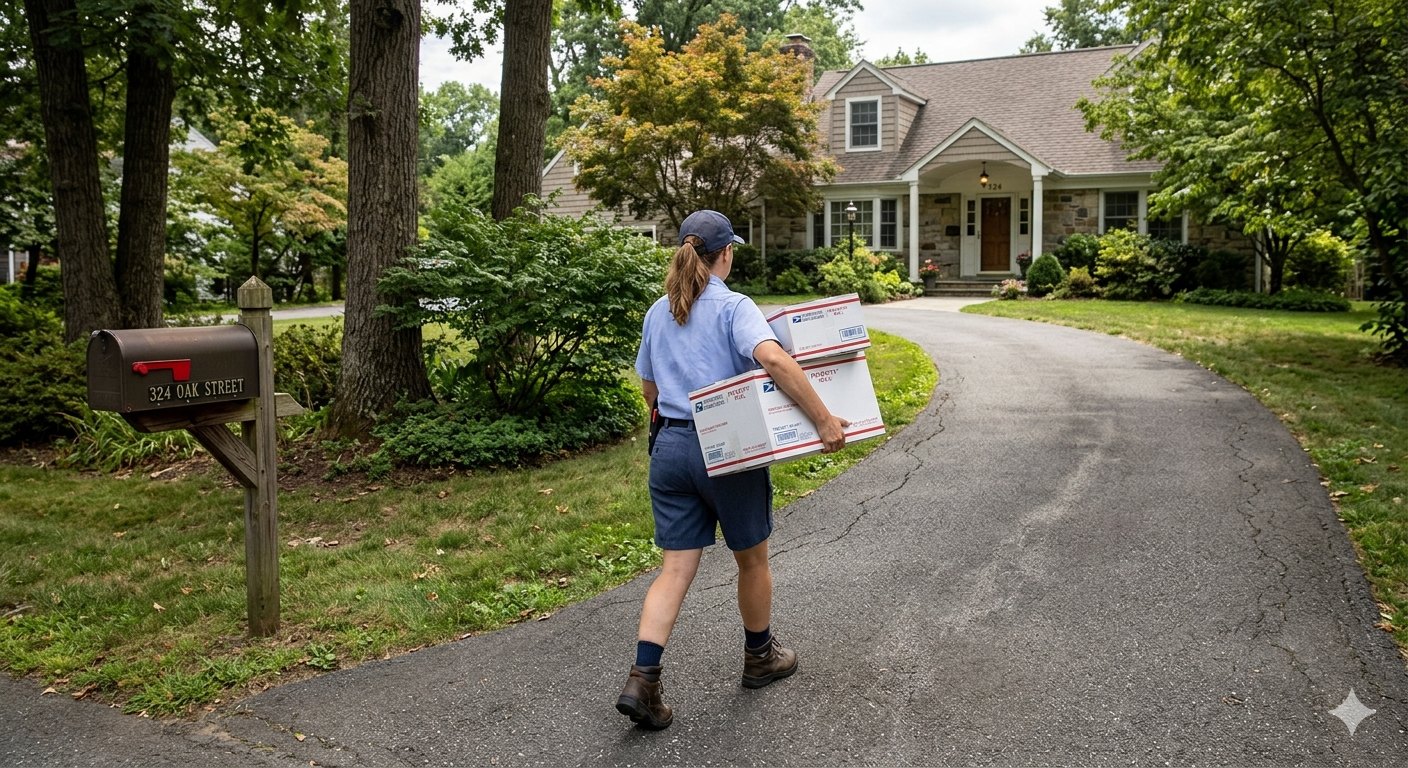
the mailbox
This is only valid if a package fits inside.
The more a mail carrier walks to a consumer’s door. The less efficient they are.
There goes the margin on higher revenue packages. Even if that’s not the case. How does USPS win volume here?
They could beat UPS and FedEx on price.
But the volume segment being targeted. Happens to be where UPS and FedEx are focused. And there are plenty of carriers in the market. That are quite price competitive as well.
Like, dozens of them. And the USPS knows this.
Per Steiner, low-cost providers are creating “a dramatic change in how that market is being served.”
But, back to winning volume from UPS and FedEx.
Service reliability must be competitive. And it’s not even close to UPS/FedEx residential Ground. [debatable compared to Saver/Economy]
The USPS appears to be grasping at straws here.
The USPS’s package business is a mess.
They’ve lost volume from their largest customers. Which will accelerate this year.
They’re in the middle of an odd last-mile auction. [with no clear benefit/outcome]
Now, the USPS wants to take a page from the UPS and FedEx playbook. And focus on heavier, higher-revenue packages.
Good luck to them. They’re going to need it.
Originally published on LinkedIn.
Want to know where your UPS and FedEx agreement stands? The LPF Parcel Contract Scorecard benchmarks your discounts and terms, identifies the five negotiation asks that matter most, and estimates the savings range. Fixed price, delivered in 7 business days.