And it has a massive advantage over UPS and FedEx to make it work.
Amazon can create demand with fast delivery. Which builds unit/package delivery density. Which lowers unit delivery costs. Which enables faster delivery. Which increases demand. And the cycle feeds itself.
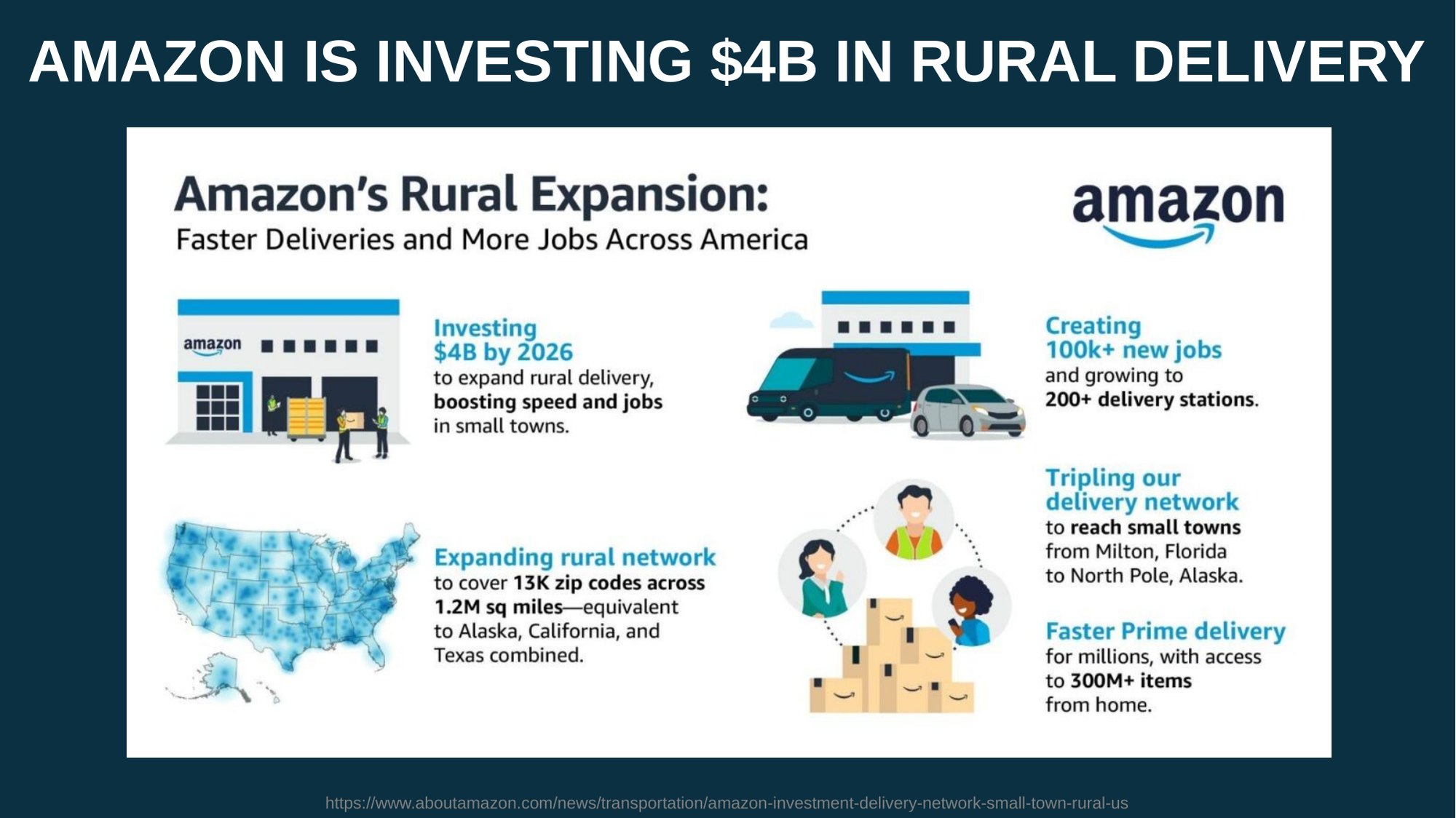
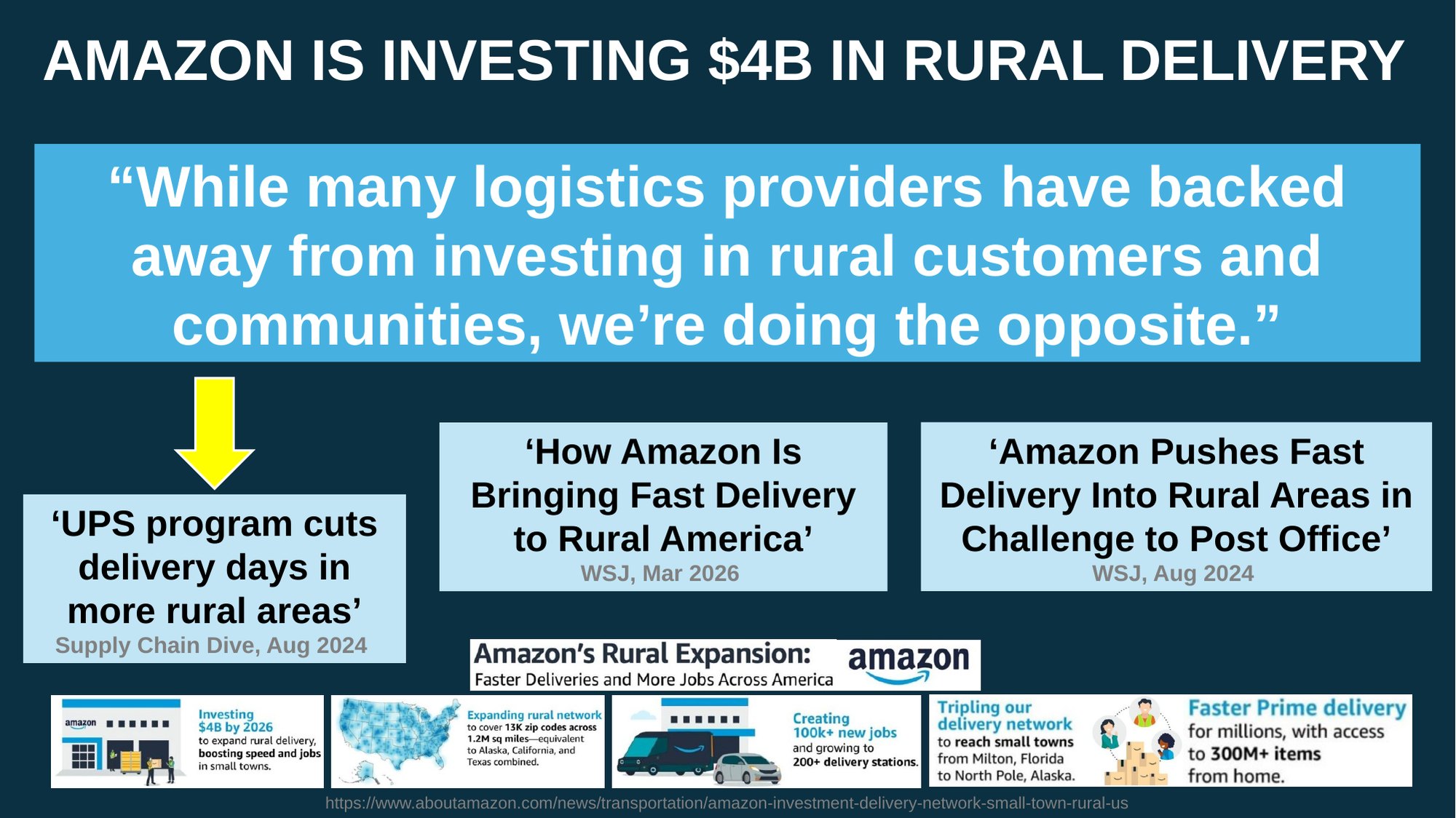
“While many logistics providers have backed away from investing in rural customers and communities, we’re doing the opposite.” [Amazon taking a shot at UPS]
UPS/FedEx et al have assessed rural surcharges for years.
But the affected zip codes have increased. So has the surcharge amount. [shocker, I know] Both carriers now charge a Remote Area Surcharge. [FedEx $16.75, UPS $16.50]
The USPS doesn’t discount rural zip codes. For Parcel Select NSA rates and platform rates.
Many regional carriers have rural surcharges. [or more often don’t serve rural zip codes]
Low delivery density is a legitimate cost driver for these carriers.
So, over time, maybe they’ll be glad to lose rural volume to Amazon Shipping.
Amazon is investing in rural delivery. At a time when other carriers are reducing service. And/or increasing rural surcharges.
And it has a massive advantage over other carriers. Creating package volume, not just supporting it.
Originally published on LinkedIn.
Want to know where your UPS and FedEx agreement stands? The LPF Parcel Contract Scorecard benchmarks your discounts and terms, identifies the five negotiation asks that matter most, and estimates the savings range. Fixed price, delivered in 7 business days.