Maybe … but not as much as you think.
First, let’s qualify this a bit.
This is a common shipper objection to diversifying their carrier base.
Alternative carriers hear this …
ALL THE TIME
But, it’s a misunderstood factor. When retailers are looking to add carriers.
Here’s why, and what shippers can do about it.
Some discounts are tied to revenue commitments
Many FedEx and UPS agreements contain revenue commitments.
Commitments met = “x%” discounts for some services
Discounts correlate to customer revenue over a defined period of time.
Sounds simple, right?
Nope. And FedEx and UPS like it that way.
FedEx Earned Discounts
FedEx’s version of this is Earned Discounts (ED).
ED revenue tiers can determine part of the discounts. For Express and Ground services.
The “revenue” is the undiscounted transportation charges. It’s measured using a rolling-52 week period.
Discounts correlate to ED tiers. Which contain a range of annual revenue.
If revenue increases to the next tier. Discounts will increase (good).
If revenue decreases below the current tier… wait for it … … discounts decrease (bad)! 😲
This is where people get stuck.
Isn’t this fun 😏 But wait, there’s more.
UPS Portfolio Tier Incentive
For brevity’s sake, UPS’s version is similar to FedEx’s.
Rolling 52-weeks, revenue tiers, etc.
One difference can be that UPS includes surcharge revenue in the calculation.
How FedEx and UPS “manage” revenue tier discounts
Ah, the crux of the issue.
Both carriers often structure the revenue tiers to be punitive (e.g. discount loss) with reduced revenue. And unrewarding as revenue increases (e.g. small discount increases).
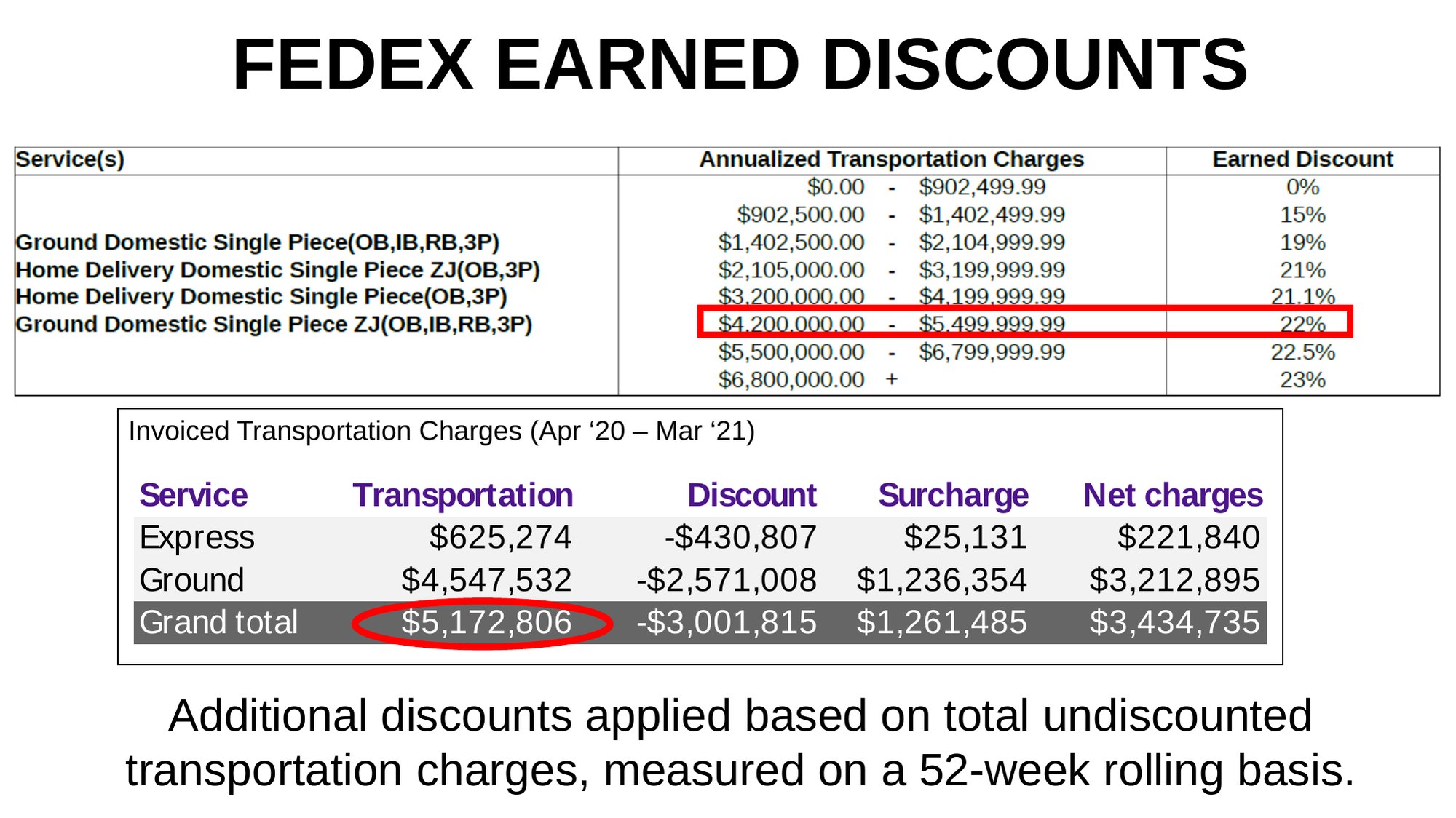
- This shipper was slotted into the 19% ED tier.
- Notice the wide revenue bands (relative to baseline) on the higher tiers.
- Discount increases amount to <1% per tier after the initial 2% bump
- But a drop below the baseline tier (19%) and discounts drop 4%.
All discount losses are not created equal
Let’s stick with the FedEx example.
But the shipper is in the 22% tier, at $5.2M.
If 50% of the revenue ($2.5M) is moved to another carrier, Ground discounts decrease.
By a whopping 1%.
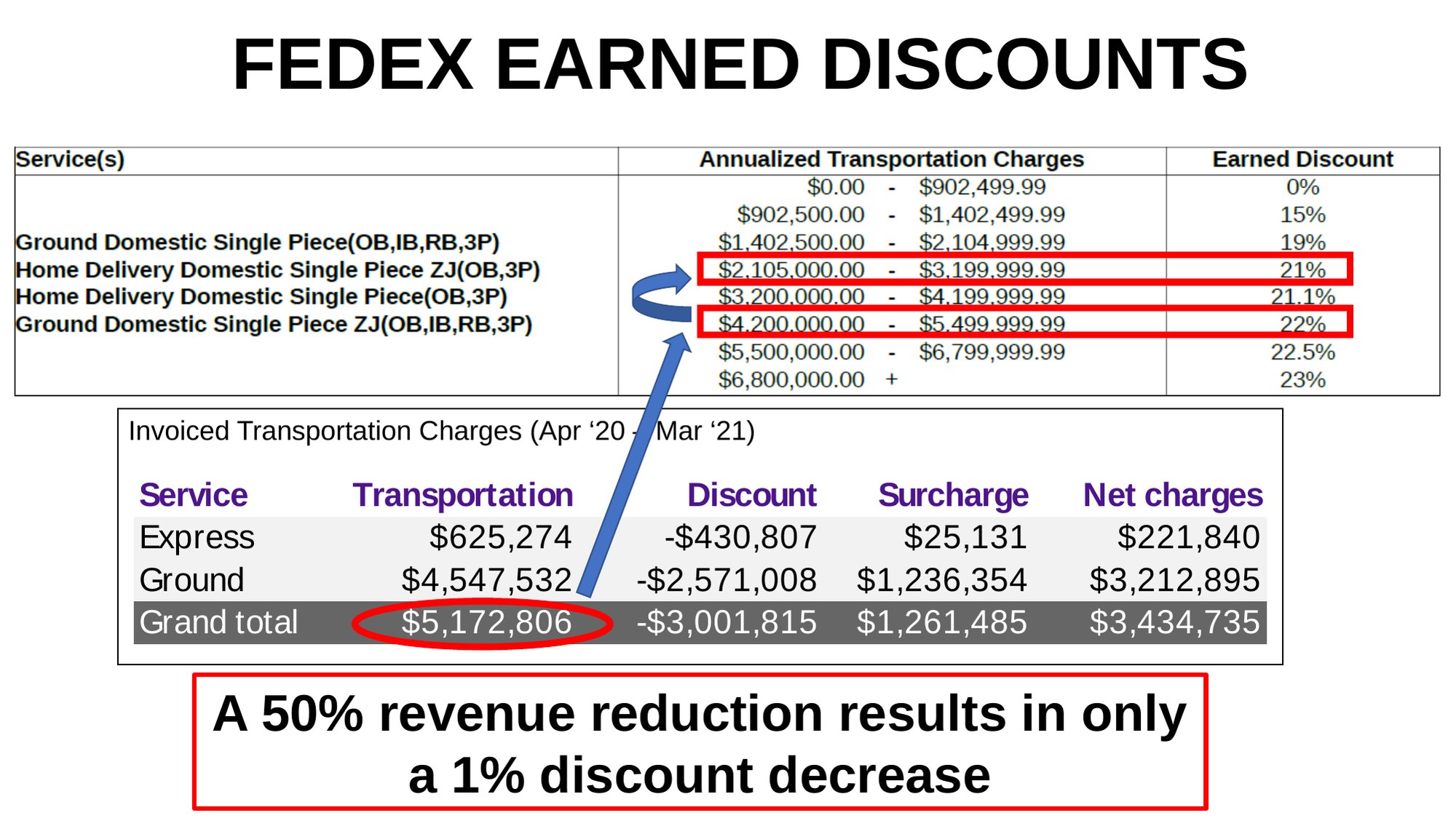
⚠️ This is the issue: the fear factor of “losing discounts” is often the focus.
Instead of the actual impact of reduced discounts.
FedEx and UPS customers:
- Closely manage your carrier agreement revenue
When exploring alternative carriers, do the math …
… BEFORE you respond with …
“We’ll lose our FedEx/UPS discounts, if we move volume to another carrier”
Originally published on LinkedIn.
Want to know where your UPS and FedEx agreement stands? The LPF Parcel Contract Scorecard benchmarks your discounts and terms, identifies the five negotiation asks that matter most, and estimates the savings range. Fixed price, delivered in 7 business days.