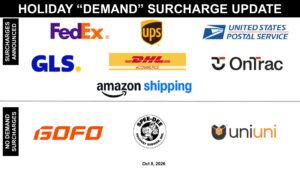
But not all parcel carrier fuel surcharges are created equal.
Here’s a rundown of recent FSC trends.
1. UPS and FedEx
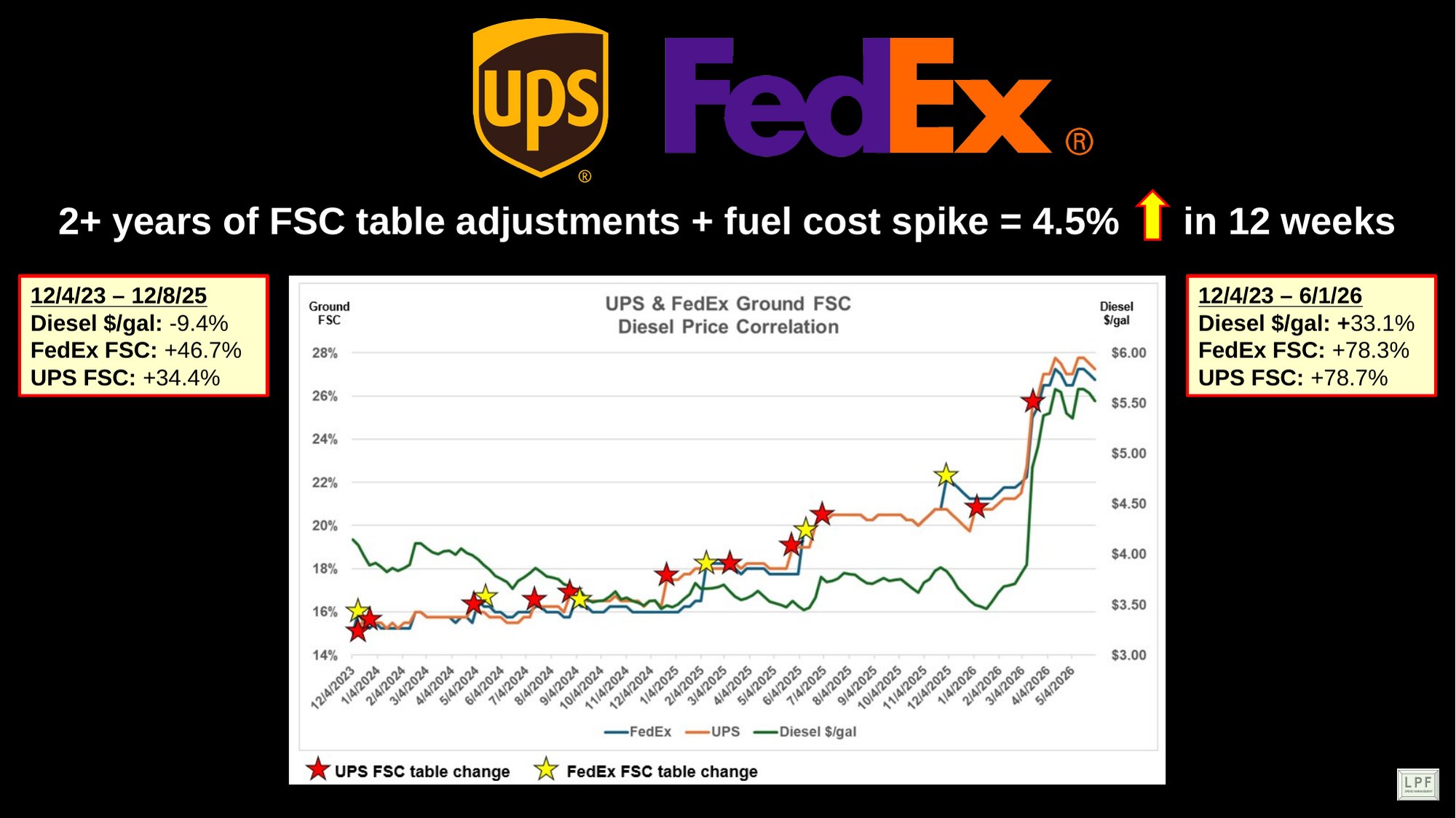
From Dec 2023 to March 2026. UPS and FedEx used FSC table changes to drive revenue.
Now that fuel costs have increased. Both carriers can sit back and let the table changes do the work. And customers continue to feel the pain.
2. USPS
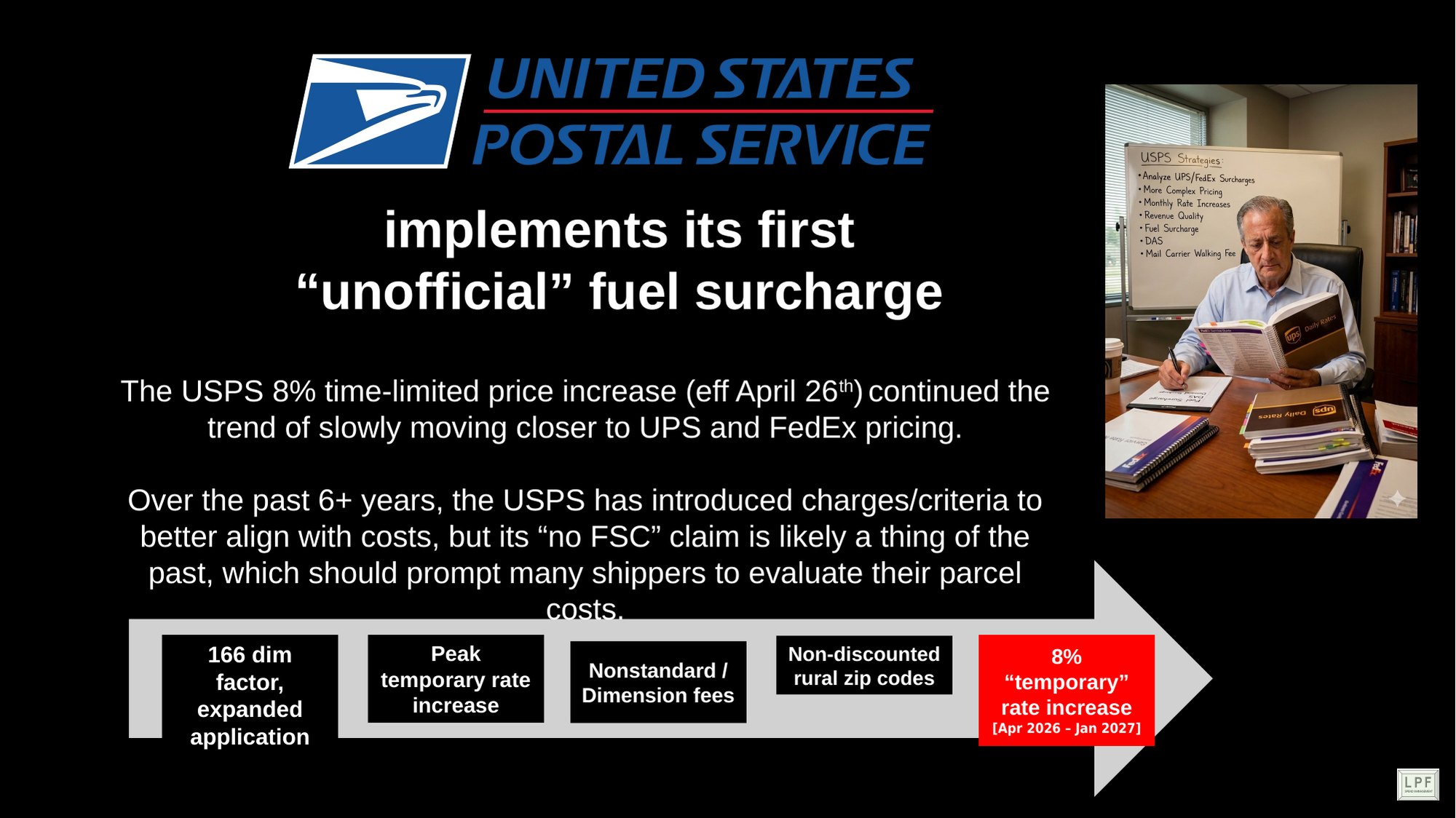
The USPS doesn’t have a fuel surcharge. But the 8% time-limited price increase acts like one. With commentary pointing to a permanent FSC in 2027.
3. OnTrac and Amazon Shipping
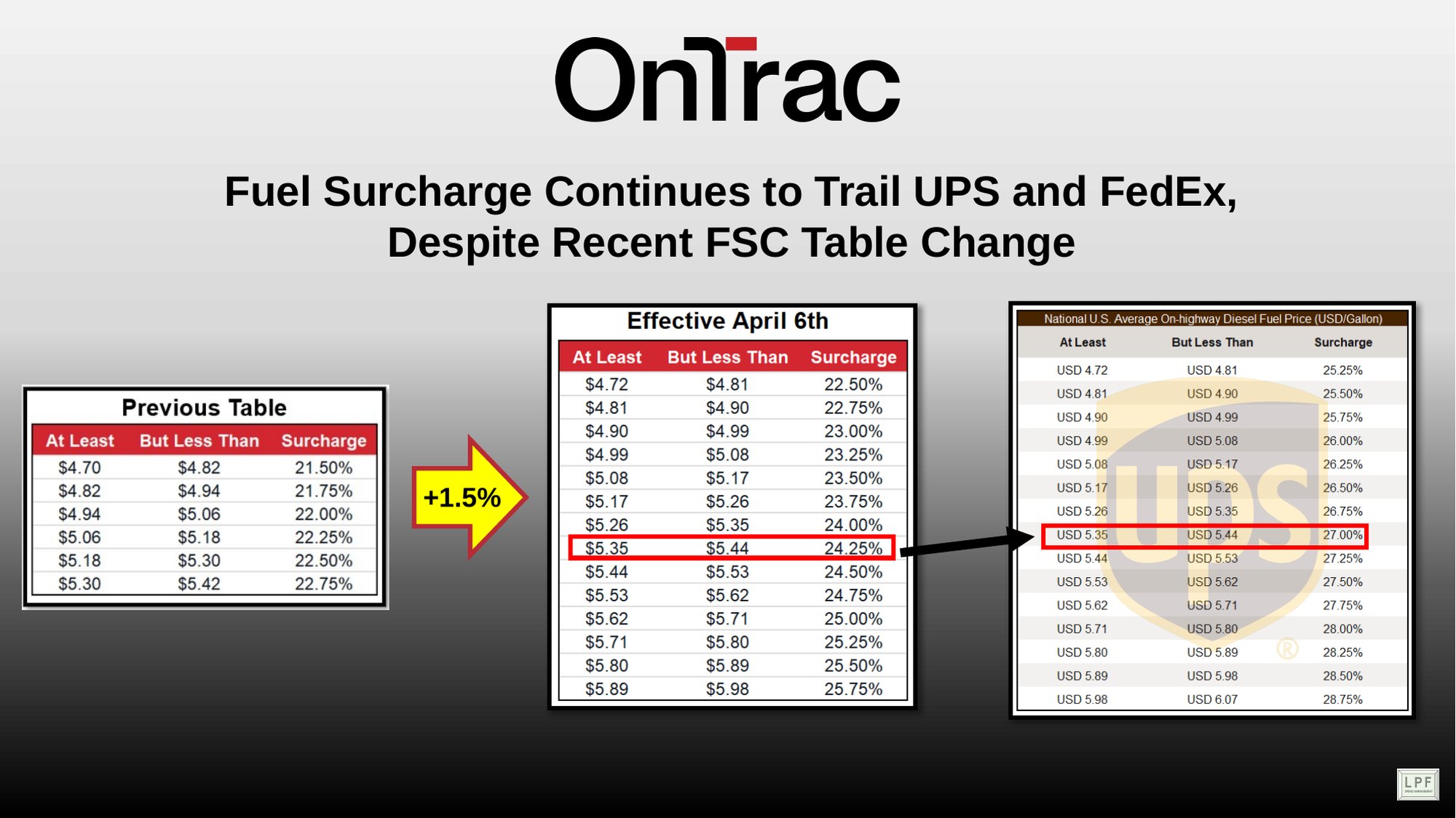
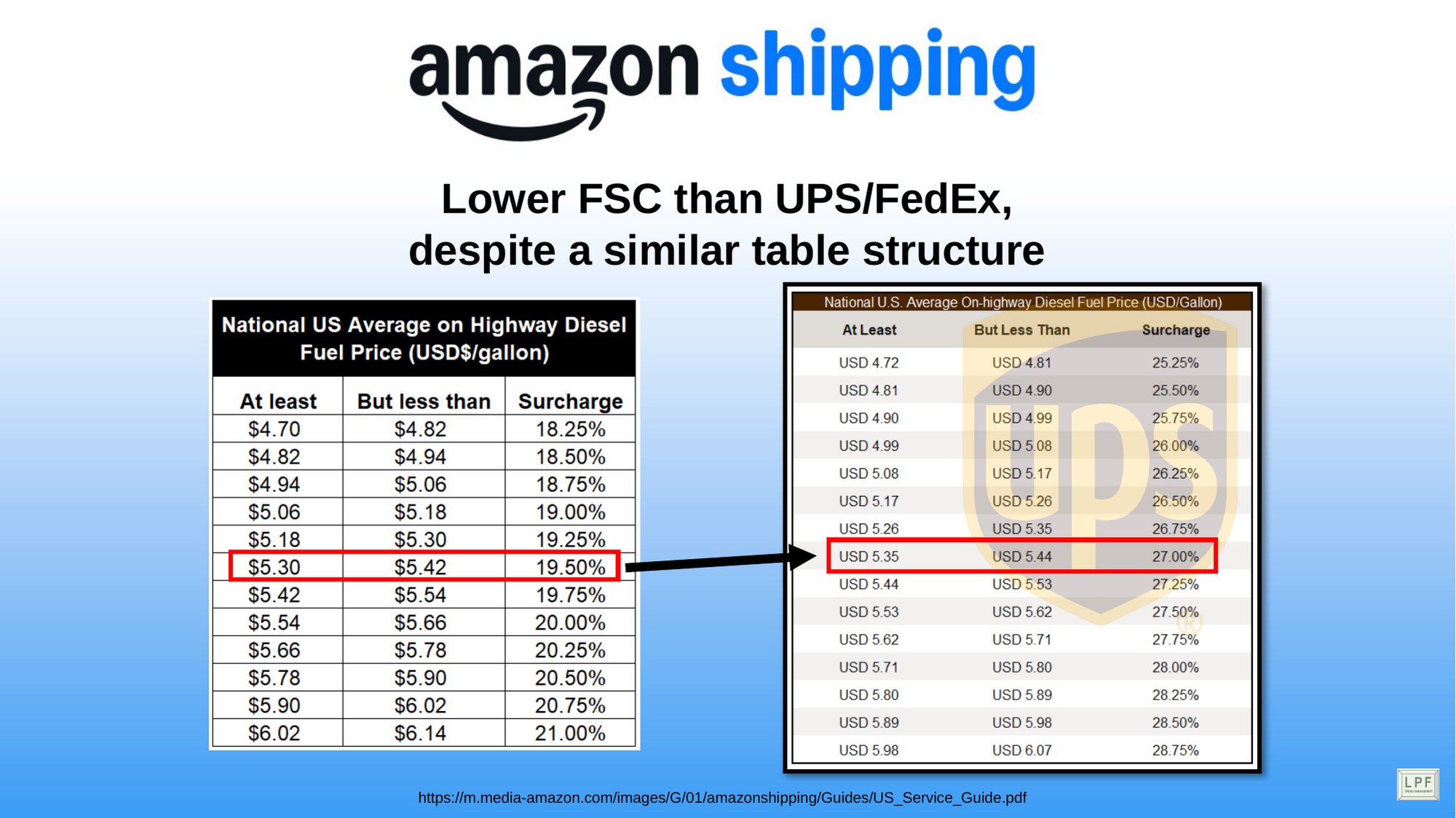
Both carriers have FSC tables similar to UPS/FedEx. [at least in structure]
But both carriers’ FSC % is less than UPS/FedEx. And both carriers have fewer/lower surcharges.
So, while FSC increases are material. It’s not quite as painful as it is with UPS/FedEx.
4. UPS Mail Innovations (MI)
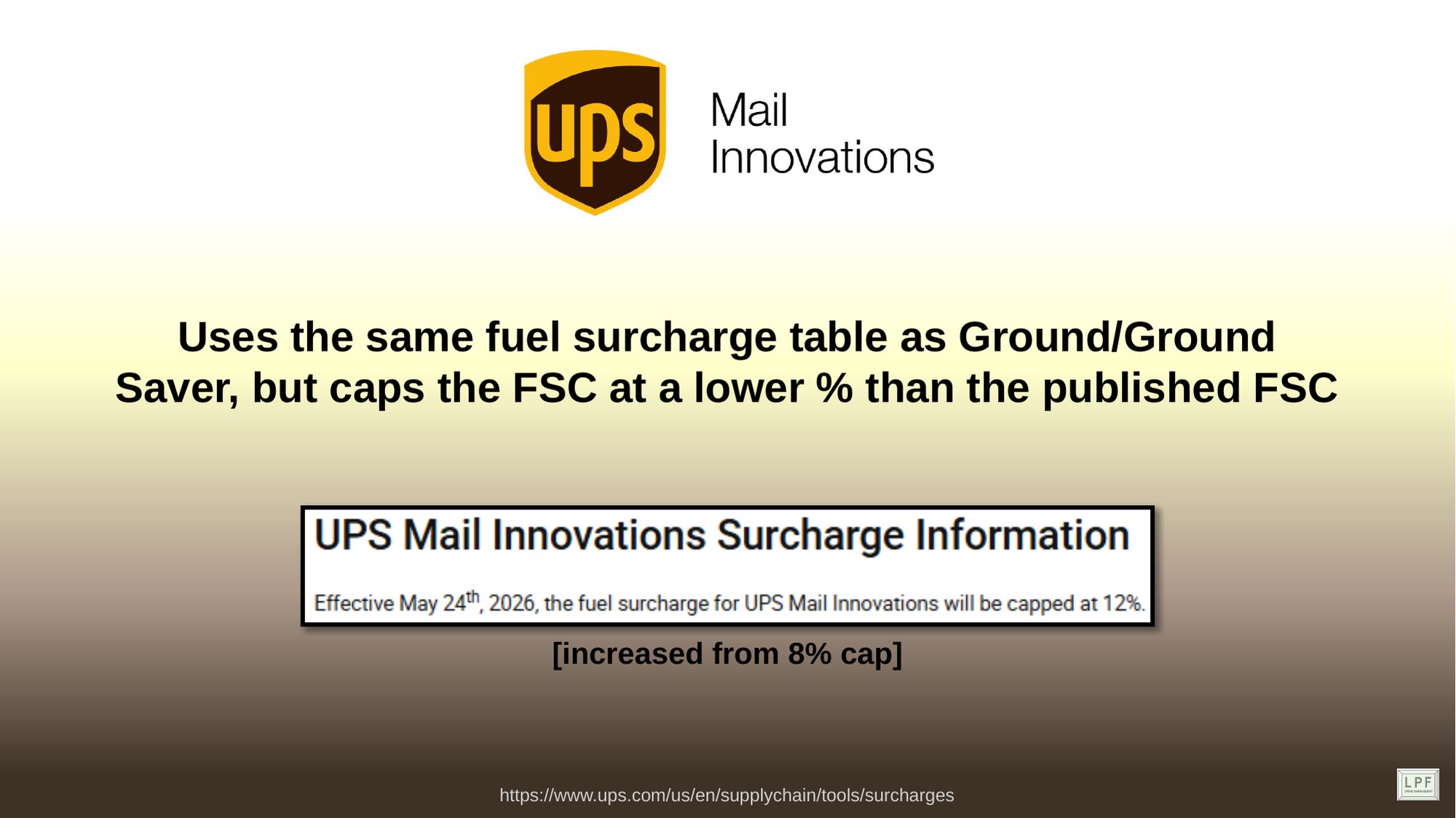
This one is pretty simple. MI uses the same FSC table as UPS Ground. But it applies a cap. Which, of course, the published FSC stays well above. On May 24th, the cap moved from 8% to 12%.
5. OSM
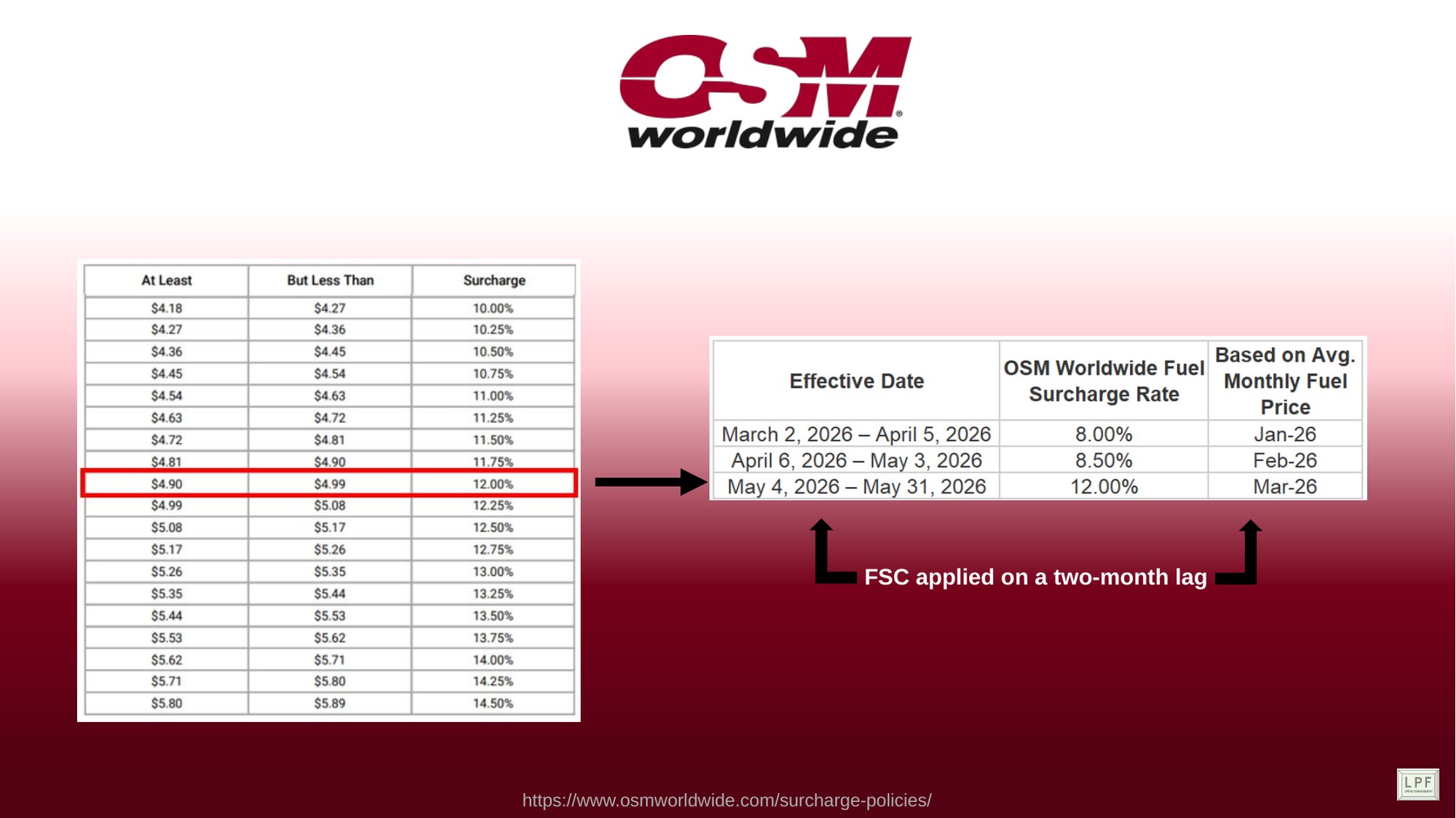
OSM’s FSC table is similar to UPS/FedEx. But the FSC % is far lower. [13.5% in June] And is applied on a 2-month lag.
6. DHL eCommerce
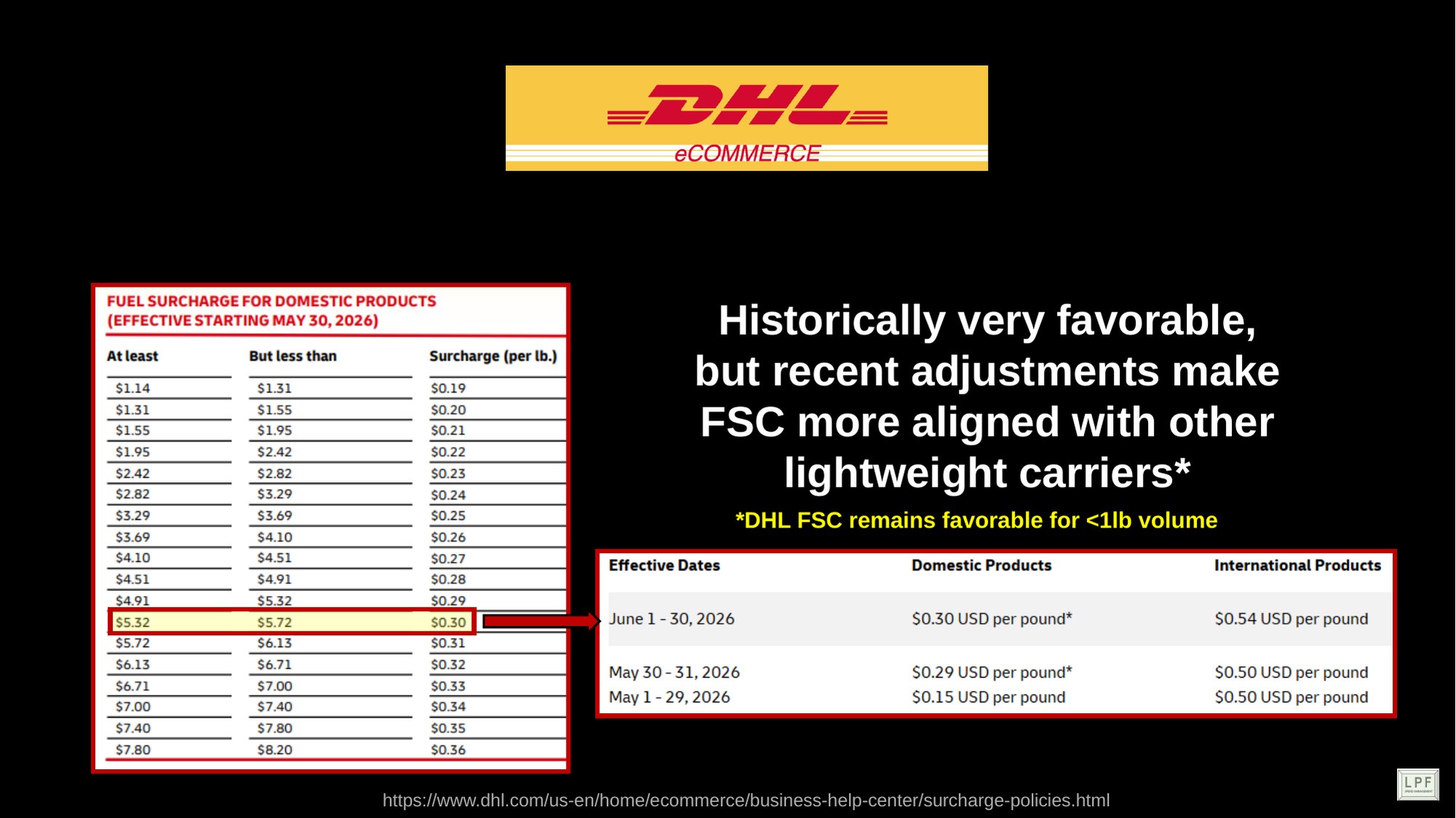
The structure, $/LB is unique, and historically has been low. [compared to the competition] Like OSM, the FSC % is applied on a 2-month lag.
DHL adjusted its FSC table at the end of May. Resulting in a $0.14/LB FSC increase.
Bringing its FSC % more in line with other lightweight carriers. [for > 1lb volume] The FSC applied to < 1lb volume remains favorable.
Like other lightweight carriers, DHL assesses few surcharges.
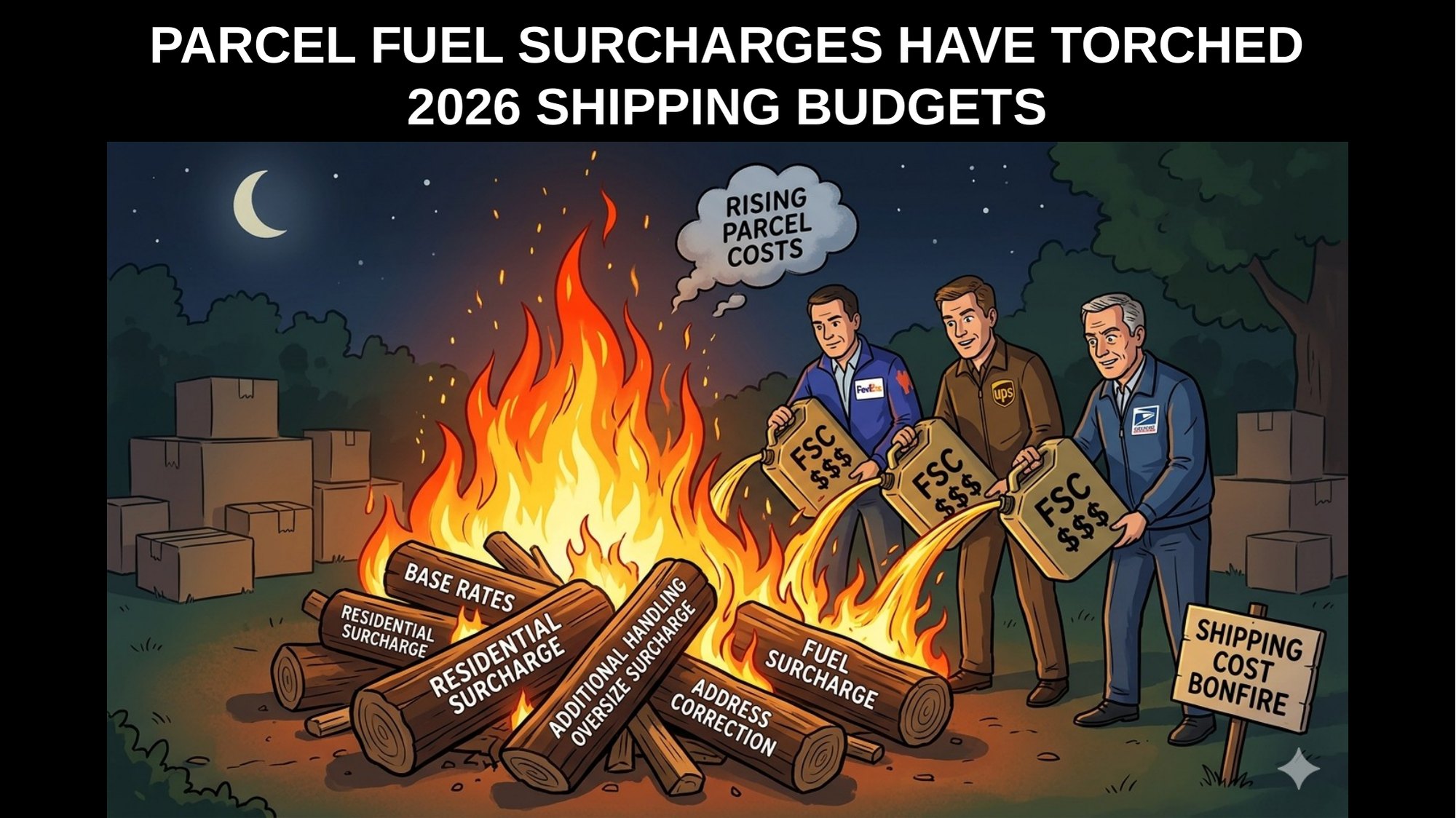
Fuel surcharges have torched shipping budgets. But they vary widely by carrier. Requiring shippers to dig in and understand them. And make adjustments to limit the impact.
Originally published on LinkedIn.
Want to know where your UPS and FedEx agreement stands? The LPF Parcel Contract Scorecard benchmarks your discounts and terms, identifies the five negotiation asks that matter most, and estimates the savings range. Fixed price, delivered in 7 business days.