FedEx must be loving this.
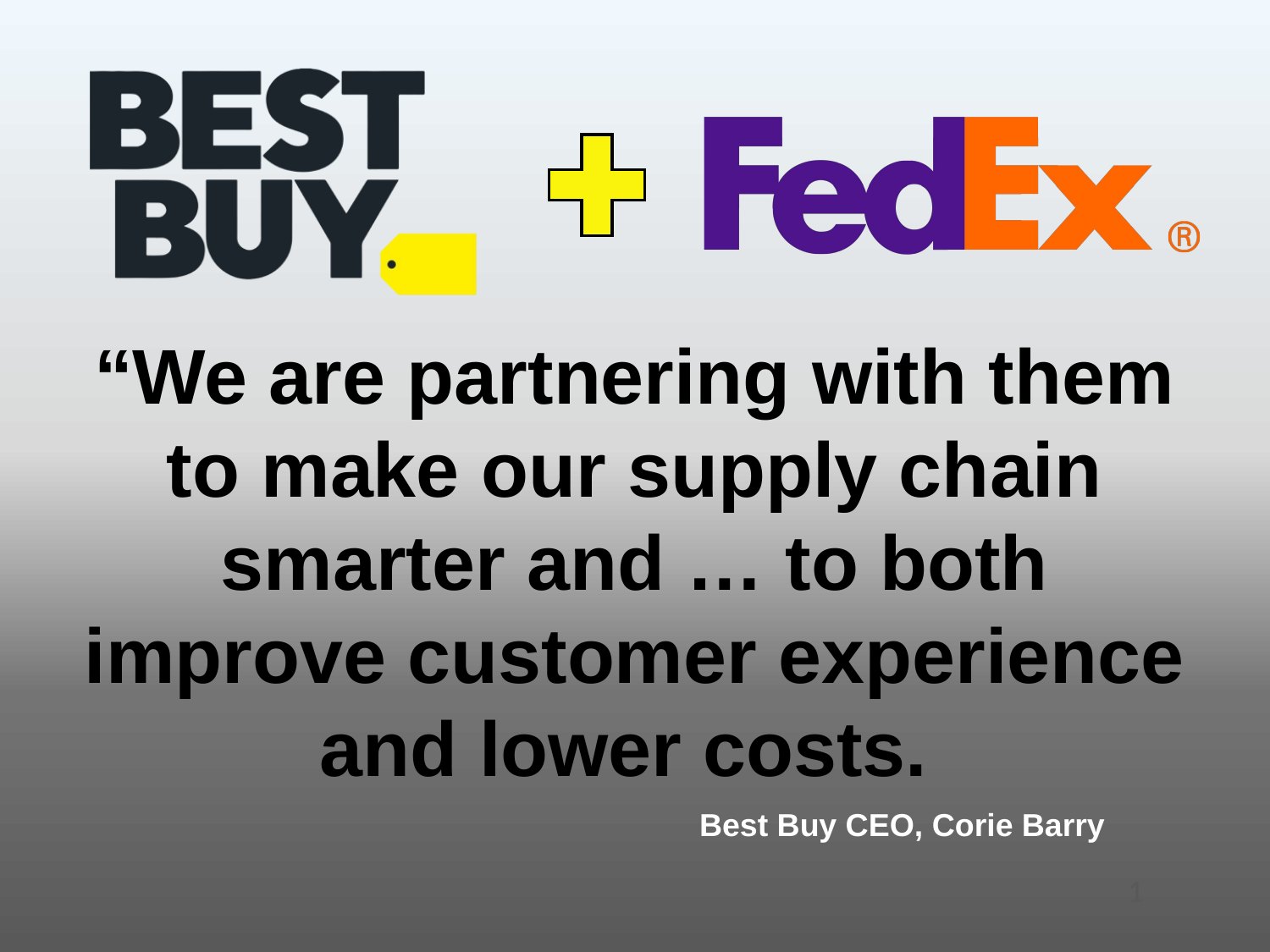
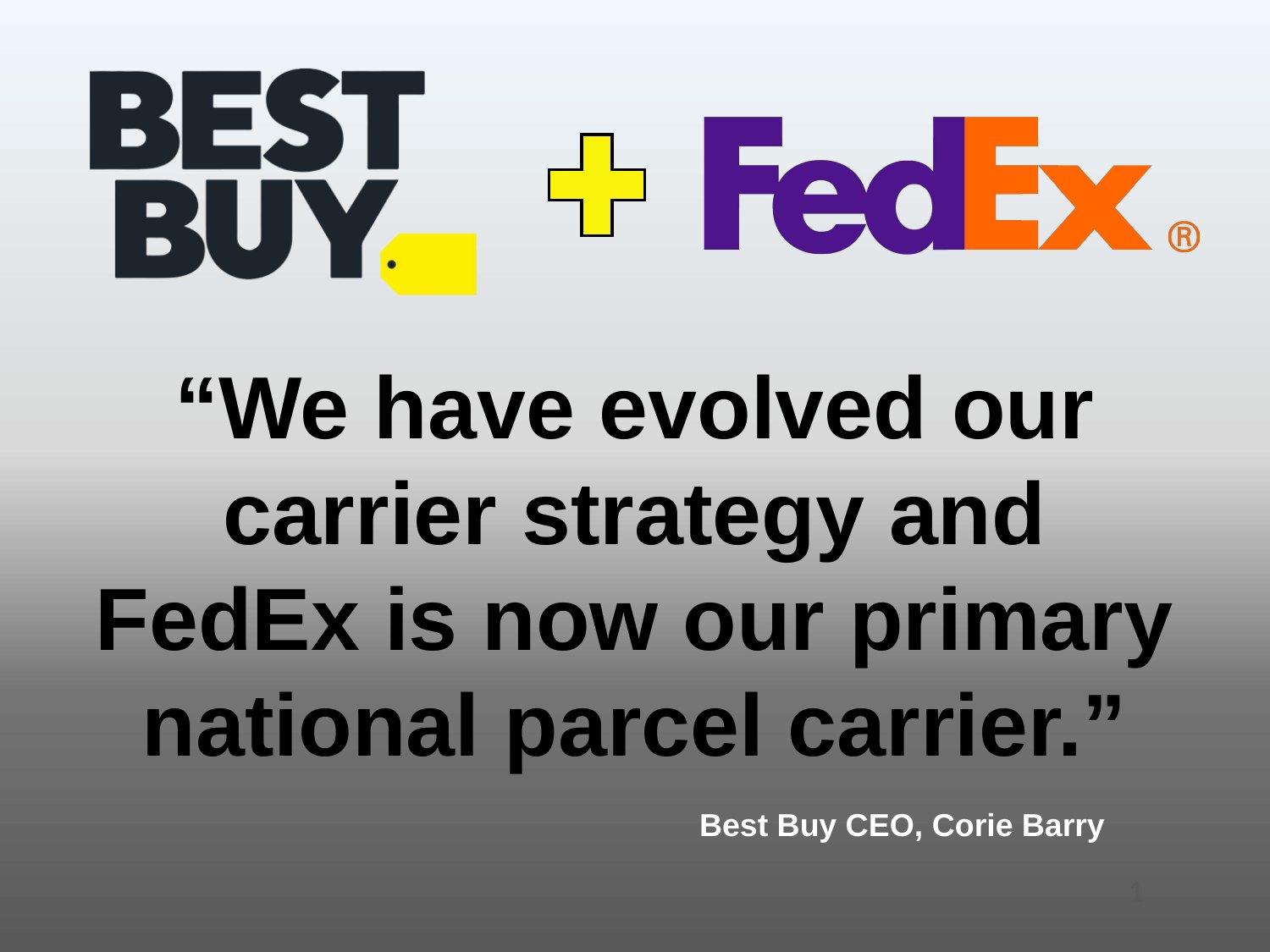
Part of Best Buy’s earning’s call was practically a commercial for FedEx. It’s rare that a large retailer calls out a parcel carrier.
Let alone announce a new primary carrier on its earnings call.
But that’s what Best Buy did last week. Even using FedEx’s “making supply chains smarter” tagline.
So, this is a big win for FedEx … but how big?
Best Buy’s US online revenue was $13B in FY25.
But 43% of Best Buy’s online orders are picked up in stores. [as of Nov 2023]
Leaving “only” $7.4B of shipped digital revenue.
In 2023, Best Buy started to reduce orders shipped from stores. As of November 2023, that figure was 38% SFS. Let’s say that’s 35% now.
So, 65% from distribution centers ($4.8B) is nice for FedEx.
Best Buy is taking steps to optimize fulfillment by improving inventory placement.
So, of the 35% that is SFS, let’s say 20% are local deliveries.
FedEx may still deliver a portion of local orders.
But let’s say DoorDash, or other local couriers, handle most of it. That leaves 15% for FedEx (about $2B).
So, that’s $6.8B of non-local digital revenue delivered to customers. [couldn’t find AOV to correlate to number of orders]
In FedEx’s case, “primary” carrier doesn’t mean 100%.
But I assume it’s the majority of available volume.
FedEx is Best Buy’s new primary parcel carrier.
Which was described in rare detail on Best Buy’s earnings call.
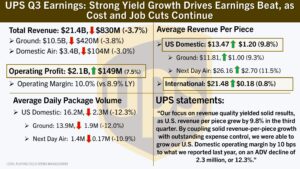
This is a big win for FedEx. [and presumably a big loss for UPS]
Originally published on LinkedIn.
Want to know where your UPS and FedEx agreement stands? The LPF Parcel Contract Scorecard benchmarks your discounts and terms, identifies the five negotiation asks that matter most, and estimates the savings range. Fixed price, delivered in 7 business days.