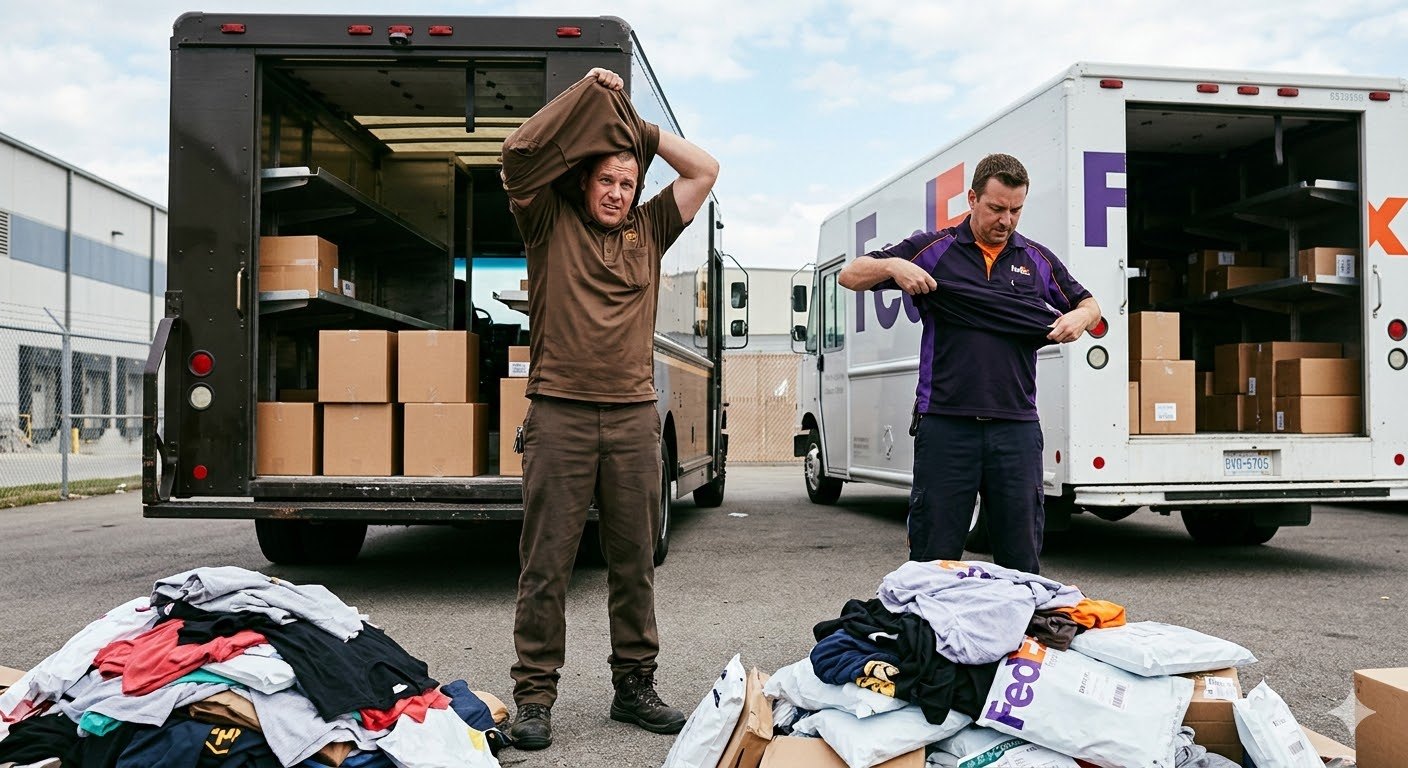
T-shirtless, that is.
“It’s a whole different ball game than if you’re talking about a T-shirt, right, going to a residence.” UPS CFO Brian Dykes
“If you’re shipping T-shirts, FedEx might not be for you.” FedEx CCO Brie Carere
Both statements are from investor events in the past month.
Technically, this isn’t new information. [but stating it this bluntly is] As both carriers have held the same narrative for years. Declaring a focus on higher-margin volume segments. Like B2B, healthcare, and SMB’s.
But both carriers are now rightsizing their networks. And cutting staff in an efficiency push. As far as the “we don’t want your t-shirts” statement. [doubt they’re saying this to Gap or Dick’s]
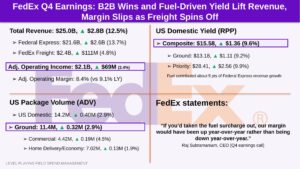
It underscores a strategy FedEx started a decade ago. When SmartPost was a hybrid service with the USPS.
FedEx pulled back on <1 lb volume. Then completely insourced SmartPost delivery starting in 2019. Basically conceding lightweight, low-margin volume. Like t-shirts.
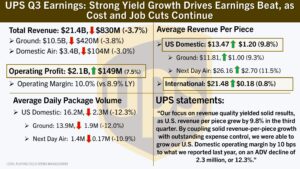
Along the way, UPS took a different route. Or maybe a temporary detour in 2023.
After losing volume coming out of the Teamster negotiations. UPS bought low-revenue volume to fill capacity. [a large chunk of which was Temu/Shein SurePost volume]
That plan backfired, causing Ground yield to decline.
In 2025, UPS started to exit low-revenue/margin volume. Both from Amazon and lightweight Ground Saver volume.
In 2026, delivering t-shirts is even lower margin. With dozens of providers offering low rates. So, UPS and FedEx will focus elsewhere.
It seems like an obvious strategy. But executing it requires precision.
And neither carrier can completely ignore this volume segment. As plenty of SMB’s ship apparel as a core product. [or other lightweight, relatively low-value items]
While FedEx claims to make gains with SMB’s. I think they still trail UPS and USPS here.
Both carriers have extensive networks of platform partners. That enables better reach than FedEx, with fewer resources.
UPS and FedEx are going shirtless.
Shunning lightweight, low-margin ecomm volume. [like t-shirts] While they focus on higher-margin volume segments. And shrink their networks.
It sounds like an obvious strategy. Extract more margin from less volume.
But there is only so much of this premium volume available. And pulling back on lightweight residential will affect delivery density.
So it will be challenging for both carriers to succeed with this strategy.
Which begs the question:
Can UPS and FedEx increase profitability, while ceding volume share?
Originally published on LinkedIn.
Want to know where your UPS and FedEx agreement stands? The LPF Parcel Contract Scorecard benchmarks your discounts and terms, identifies the five negotiation asks that matter most, and estimates the savings range. Fixed price, delivered in 7 business days.